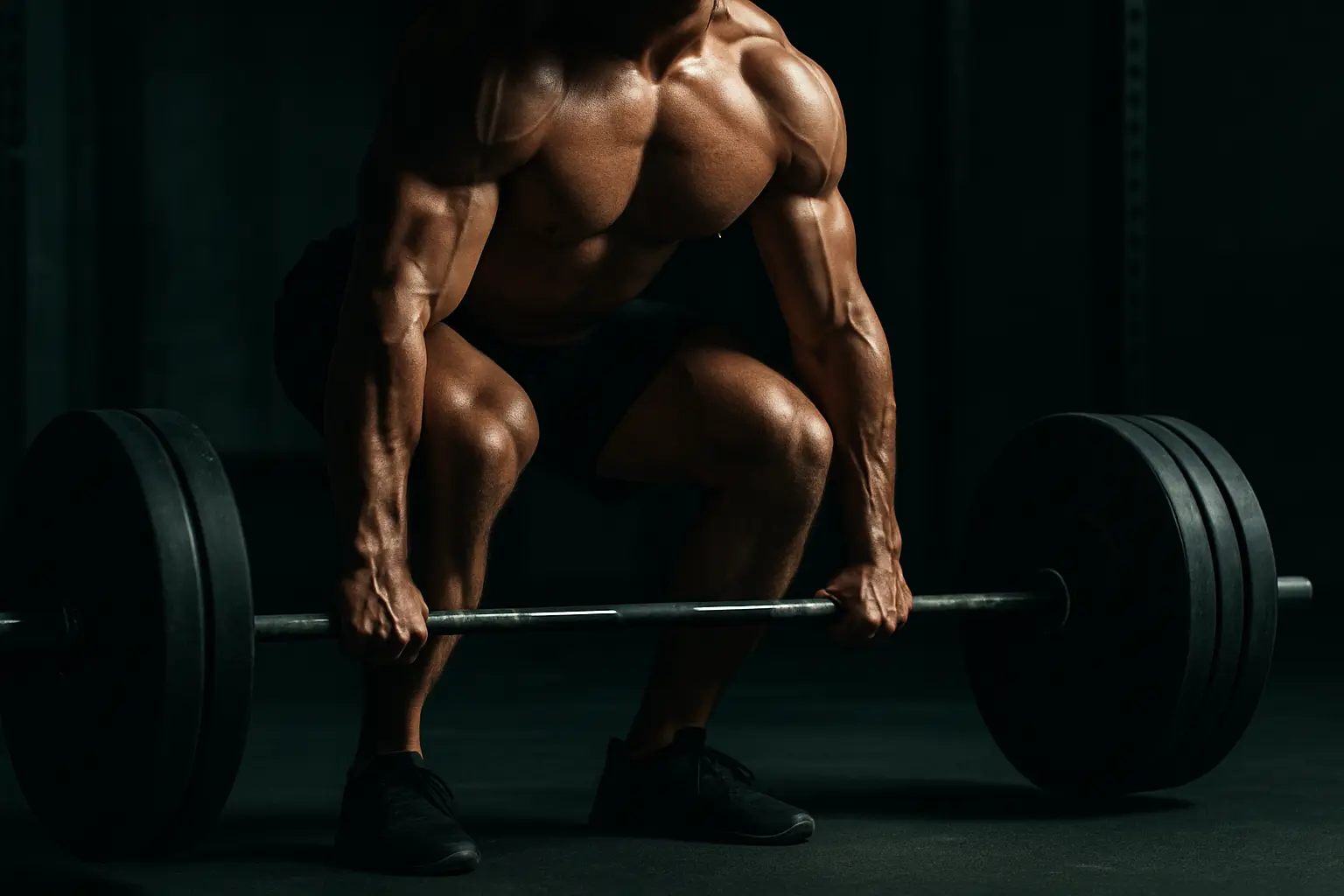
Recovery Peptide Stack: For Training Volume + Soft-Tissue Wear
The defensible recovery-focused peptide stack — BPC-157 + TB-500 + supportive sleep / GH-axis layer — for athletes managing high training volume and accumulated soft-tissue wear.
By PeptidesDB EditorialPublished Jun 18, 20265 min read
The defensible recovery stack is built on the Wolverine Stack (BPC-157 + TB-500) for soft-tissue and tendon work, with optional GH-axis layer (CJC-1295 + Ipamorelin) for sleep-mediated recovery and protein-balance support. Realistic effect: meaningfully faster soreness clearance, fewer overuse injuries during high-volume training, more weekly training capacity. This article covers the recovery-focused stack patterns, when to use which, and how it differs from the muscle-building or healing stacks.
For the per-peptide comparison underpinning this, see BPC-157 vs TB-500 and Ipamorelin vs CJC-1295.
What "recovery" means here
Recovery splits into two timescales:
- Acute / 24–72 hour soreness clearance after high-intensity sessions. Driven by muscle-fiber repair, inflammation modulation, and circulation.
- Chronic / weekly soft-tissue wear — tendon irritation, joint discomfort, accumulated micro-damage that builds across training blocks.
Peptides can support both layers but via different mechanisms:
- Acute recovery benefits from GH-axis support (CJC + Ipa) via sleep amplification and protein-balance effects.
- Chronic soft-tissue wear benefits from healing peptides (BPC-157, TB-500, GHK-Cu) via direct tissue-repair mechanisms.
The stack pulls from both classes when both layers are relevant.
The base recovery stack: BPC-157 + TB-500
The healing-peptide foundation. Same as the Wolverine Stack but used preventively during heavy training blocks rather than reactively post-injury.
Pattern:
- BPC-157: 250 mcg SC twice daily, daily.
- TB-500: 2.5 mg SC twice weekly during first 4 weeks (loading); 2.5 mg weekly during weeks 5–8 (maintenance).
- Duration: 4–8 weeks during a peak training block; longer cycles less common.
Best for:
- Athletes in a competition-prep block.
- Lifters running high-volume hypertrophy programs.
- Endurance athletes with cumulative joint wear.
- Anyone with chronic low-grade tendon irritation that limits training.
Add-on 1: GH-axis layer (CJC-1295 + Ipamorelin)
For users who want sleep-mediated recovery enhancement and additional support for protein synthesis during heavy training, layer in the GH secretagogue stack.
Pattern:
- CJC-1295 without DAC 100 mcg + Ipamorelin 200–300 mcg SC pre-bed.
- Same 8-week cycle as the healing layer.
Adds: better slow-wave sleep, faster overnight protein synthesis, modest lean-mass support during heavy phases.
See muscle building stack for the GH-axis details if used for muscle gain rather than recovery.
Add-on 2: GHK-Cu (skin / scar tissue)
If recovery includes skin involvement (post-procedure, scar tissue, persistent skin irritation from training gear), add topical or low-dose injected GHK-Cu.
Pattern:
- Topical 1–3% serum for skin / hair-follicle areas.
- Injected 1–2 mg SC 2–3× weekly for systemic skin-quality support.
GHK-Cu research profile. Copper peptides guide.
Add-on 3: KPV for inflammation-dominated patterns
When recovery is limited by chronic low-grade inflammation rather than tissue damage per se (chronic tendinopathy, autoimmune-tinged joint patterns), add KPV.
Pattern: KPV 500 mcg SC or topical, daily, 4–6 weeks during the worst inflammation period.
What this stack will and won't do
Will:
- Faster soreness clearance after hard sessions (24–48 hour improvement noticeable by week 2–3).
- Reduced incidence of overuse injuries during high-load blocks.
- More weekly training capacity (more sessions, more volume per session before fatigue caps the work).
- Better sleep quality with the GH-axis layer.
Won't:
- Replace deload weeks. Recovery peptides extend capacity; they don't eliminate the need for periodization.
- Heal acute structural injuries faster than the acute Wolverine Stack does (this is preventive use; reactive use of the same compounds for fresh injury follows different timing).
- Substitute for sleep, nutrition, or stress management.
A representative 8-week recovery cycle
For a competitive lifter or endurance athlete in a high-load training block:
- Weeks -1 to 0 (preparation): Baseline labs (CMP, lipid, IGF-1 if including GH layer). Establish training schedule + recovery plan.
- Weeks 1–4 (loading + active):
- BPC-157 250 mcg SC BID daily.
- TB-500 2.5 mg SC twice weekly.
- Optional: CJC-1295 + Ipamorelin pre-bed daily.
- Weeks 5–8 (maintenance):
- BPC-157 continues 250 mcg SC BID.
- TB-500 drops to 2.5 mg SC weekly.
- CJC + Ipa continues.
- Weeks 9–12 (washout + deload): Stop peptides. Training deload week. Reassess soft-tissue status and training trajectory.
Cost
| Layer | Cost (research-use channels) |
|---|---|
| BPC-157 + TB-500 (8 weeks) | $400–$800 |
| CJC-1295 + Ipamorelin (8 weeks) | $200–$400 |
| Optional GHK-Cu | $100–$300 |
| Optional KPV | $150–$300 |
| Full stack (8 weeks) | $850–$1,800 |
Clinical-channel pricing through a peptide-therapy clinic runs 1.5–3× higher; see peptide therapy cost.
Safety frame
- BPC-157 + TB-500: favorable acute-safety profile; long-term-use safety unstudied. Cycle, don't run continuous.
- CJC + Ipa: monitor IGF-1, fasting glucose, lipid panel.
- Rotate injection sites; see where to inject peptides.
- Pre-competition (especially for athletes subject to WADA rules): GH-axis peptides are prohibited; verify timing of any wash-out period.
- See are peptides safe?, peptide side effects.
Stack vs single compound
If budget or simplicity dictate, the decision tree:
- Only one compound: BPC-157 for soft-tissue/tendon focus; CJC + Ipa for sleep + general recovery focus.
- Two compounds: Wolverine Stack (BPC-157 + TB-500) for tissue-repair focus; CJC + Ipa pair for GH-axis focus.
- Full stack: All four layers for the most-supported recovery enhancement during peak training.
Where to go from here
- Wolverine Stack — healing-peptide stack details.
- Muscle building stack — if recovery support is part of a muscle-gain protocol.
- BPC-157 vs TB-500, Ipamorelin vs CJC-1295 — per-compound comparisons.
- /peptides/category/healing, /peptides/category/joint-pain, /peptides/category/muscle-growth — ranked hubs.
- Operational guides: calculator, how to reconstitute, how to inject, peptide cycling.
- Safety: are peptides safe?, peptide side effects.
This is informational, not medical advice.