How to Inject Peptides: Subcutaneous Technique
How to give a subcutaneous peptide injection with an insulin syringe — supplies, technique, common mistakes, and safety. Plain-language walkthrough.
By PeptidesDB EditorialPublished Jun 14, 20265 min read
Most research peptides are delivered subcutaneously — into the fat layer just beneath the skin — using a short U-100 insulin syringe. The technique is the same one used by people with type-1 diabetes several times a day, every day. Once you've done it twice it takes about thirty seconds. The mechanics below assume your peptide is already reconstituted; if it isn't, see how to reconstitute peptides first.
This guide is informational. Many peptides discussed on this site are not FDA-approved for human use. Anyone considering peptide therapy should work with a licensed clinician.
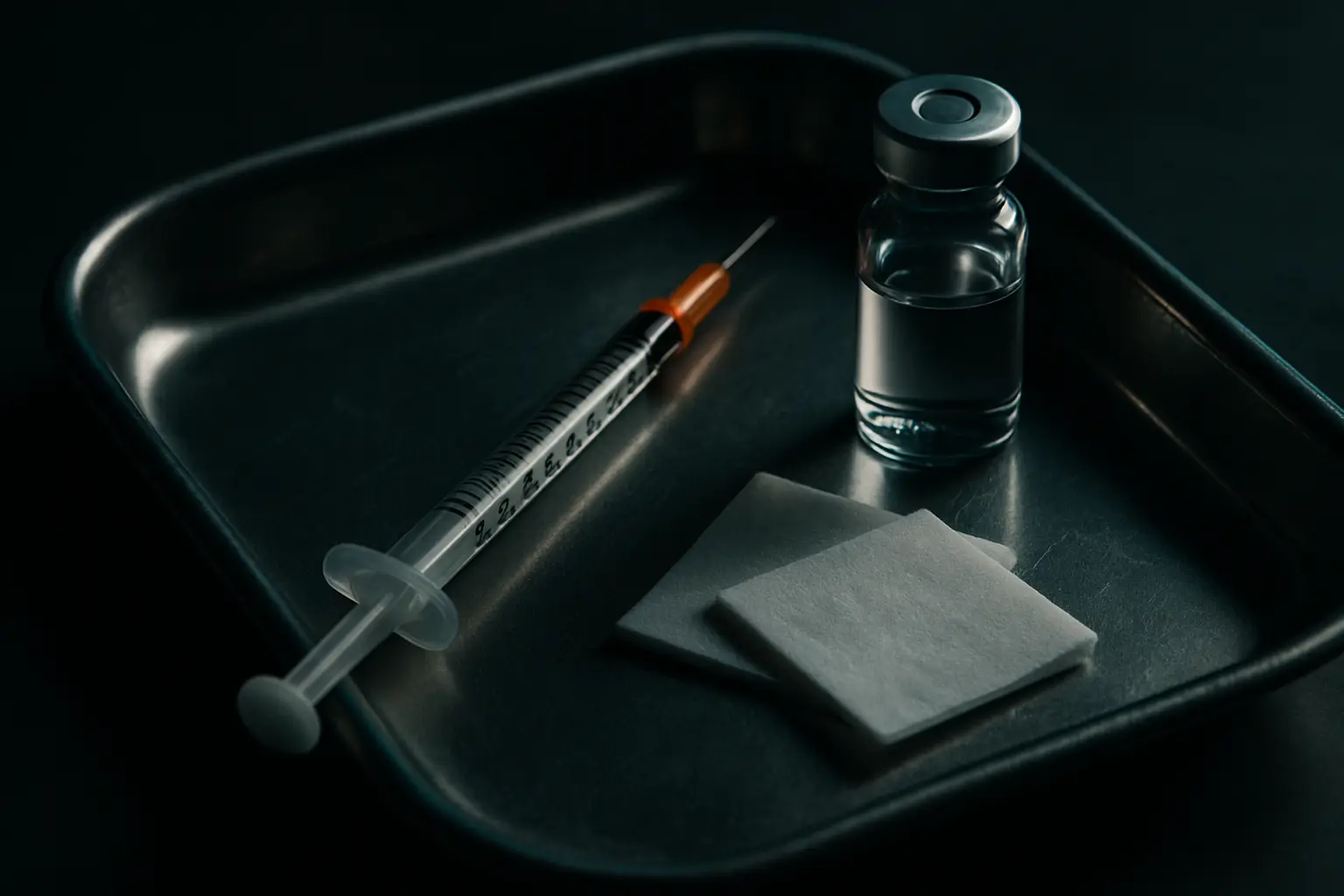
Supplies you need
- The reconstituted peptide vial, refrigerated.
- A U-100 insulin syringe — a 1 mL barrel with a 29G–31G short needle (5/16" or 8 mm) is typical. Half-mL barrels are also fine and have finer graduations for small doses.
- Alcohol swabs.
- A sharps container — a thick-walled plastic bottle works in a pinch but a proper sharps container is the right answer.
The injection procedure
- Pull the peptide vial from the fridge and let it warm for two to three minutes. Cold injectate stings slightly more; a brief warm-up is comfort-only, not safety-critical.
- Wash hands. Soap, water, twenty seconds.
- Wipe the vial stopper with an alcohol swab. Let it air-dry for a few seconds.
- Draw the dose. Pull air into the syringe equal to the dose volume (this equalizes pressure). Insert the needle, push the air in, invert the vial, and draw to your dose mark. Tap any bubbles to the top of the syringe and push them out, then re-confirm the dose mark. The number of syringe units that equal your intended dose comes from the concentration of your vial — see how to reconstitute peptides for the math or run it through the free calculator.
- Choose and prep the site. Pick an abdominal site (the classic default) at least two inches away from the navel, or an outer thigh, or an upper-outer arm. Rotate sites with each dose so you don't develop lumps. Wipe with an alcohol swab and let it air-dry — injecting through wet alcohol stings.
- Pinch the skin. Lift a small fold of skin and underlying fat between thumb and forefinger. The pinch ensures you stay in subcutaneous fat and don't enter muscle.
- Insert the needle at 45–90°. For most insulin-syringe needles (short, fine) a 90° straight-in entry into the pinch works well. For very lean sites a 45° angle keeps you in the fat layer. Push the needle fully in.
- Push the plunger in steadily. One slow press over about three seconds. Speed isn't critical; consistency is.
- Withdraw the needle, release the pinch, and dab with the swab if anything beads up. Discard the syringe directly into the sharps container.
That's the whole loop. Total clock time after the first time you do it: under thirty seconds.
Site selection and rotation
The fat layer over the abdomen (avoiding a two-inch radius around the navel), the outer thigh, the upper-outer arm, and the upper-outer buttock are all valid subcutaneous sites. Rotate sites with each injection — same-site repeat injections concentrate the local irritation and can cause lumps, bruising, or lipohypertrophy (a thickening of the fat).
A useful pattern is a clock: divide the abdomen into eight quadrants around the navel and step one quadrant clockwise each dose. By the time you're back to the starting quadrant a week has passed.
For more on individual sites, see where to inject peptides.
Common mistakes
- Re-using a dull needle. Insulin needles are sharpened for a single insertion through skin. A second use through the vial stopper plus a second skin entry is noticeably more uncomfortable. Use a fresh syringe per injection when possible.
- Injecting through wet alcohol. Wait the few seconds for it to evaporate.
- Going into muscle. A pinch + a short insulin needle should keep you in fat. If you feel sharper pain than usual or see bright-red bleed-back, you may have gone deeper. Withdraw, prepare a new site.
- Hitting the same spot every time. Rotate. Hard or itchy patches mean you need to vary sites more aggressively.
- Not equalizing pressure when drawing. Skipping the air-in step makes the plunger fight you and increases the bubble count.
- Injecting cold injectate. Not dangerous, just stingier. A two-minute warm-up at room temperature is enough.
When to skip a dose and ask for help
Stop and consult a clinician if you see any of:
- Spreading redness, warmth, or pus around the injection site (suspected infection).
- A fever or chills within hours of a dose that doesn't have another obvious cause.
- A persistent welt or lump that doesn't resolve in a couple of days.
- Hives, throat tightness, breathing difficulty, or facial swelling — possible allergic reaction; this is a medical emergency.
Sharps disposal
Used insulin syringes go into a sharps container — never a household trash bag or recycling bin. Many municipalities have free drop-off at pharmacies or fire stations; some mail-back programs exist. A thick-walled, opaque, screw-top container (a heavy-duty laundry-detergent bottle, for instance) is the minimum acceptable household substitute if a real container isn't available.
What's next
For safety and side-effect considerations across peptides generally, see are peptides safe?. For site-specific guidance and rotation patterns, see where to inject peptides. To pick a peptide and look up the suggested doses studies report, start with the peptide library.