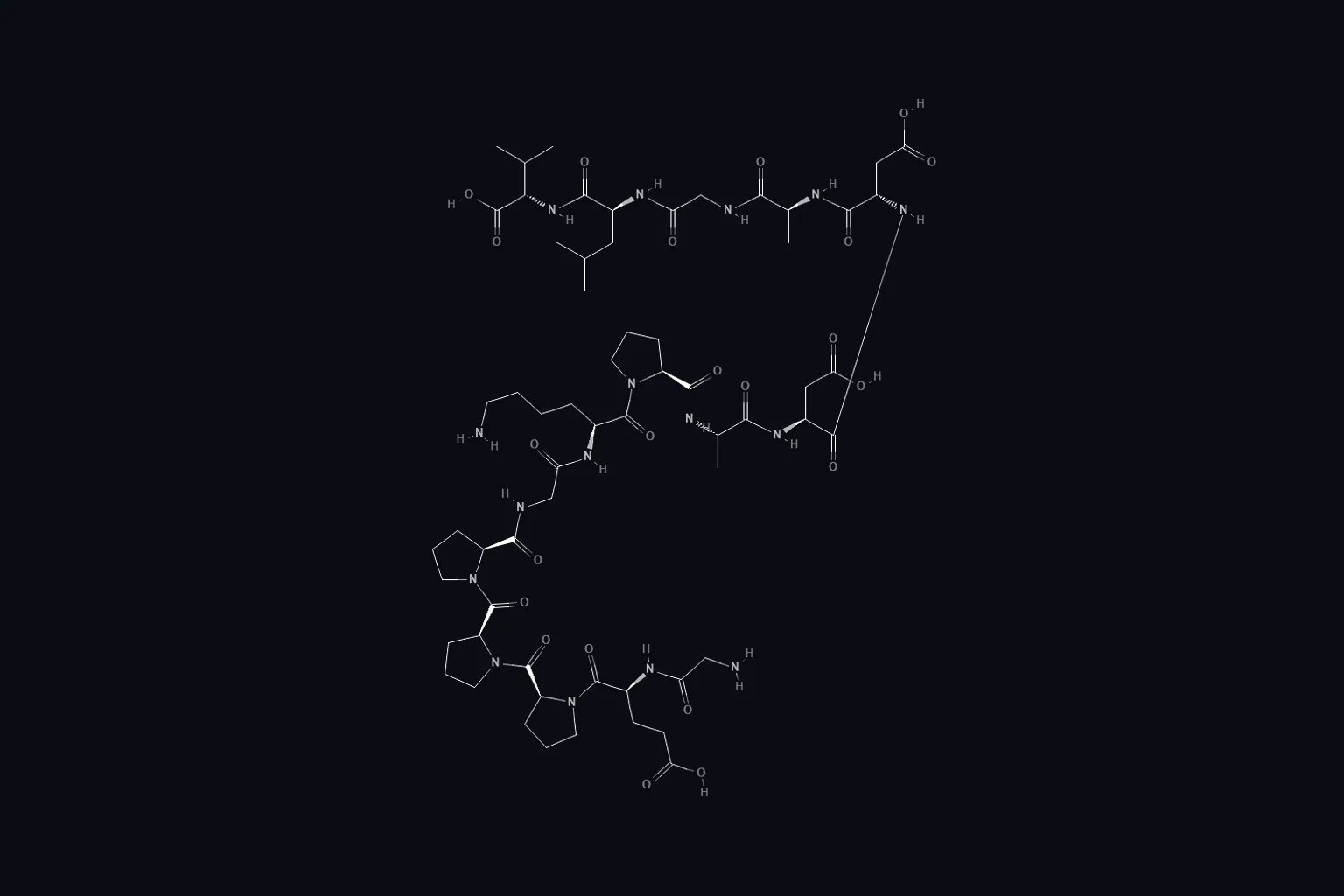
BPC 157 Reddit: What's Discussed vs the Evidence
What bpc 157 reddit threads discuss — recovery claims, gut healing, stacking, safety — against the actual evidence. BPC-157 is not FDA approved for human use.
By PeptidesDB EditorialPublished Jul 16, 20267 min read
People searching bpc 157 reddit want to know what real users say about a peptide that fitness, recovery, and biohacking communities talk about constantly. Start with the fact that reframes everything else: BPC-157 is a research-use peptide that is not FDA approved for human use. It is not an approved medicine, it has no label, and much of what circulates online runs well ahead of the actual evidence. This page is an aggregate synthesis of the themes people commonly raise, set against what is genuinely known. Nothing here quotes any specific person, thread, or account. It is educational only, not medical advice.
What BPC 157 Reddit Threads Commonly Discuss
Community discussion clusters around a predictable set of themes. Described in aggregate:
- Injury and recovery claims. By far the most common. People discuss tendon, muscle, joint, and gut complaints, and trade impressions of faster recovery.
- "Gut healing." A frequent theme, tied to the peptide's origins in gastric research and often extended far beyond what that research examined.
- Oral versus injectable forms. A durable debate about which is "worth it" and whether oral versions do anything at all.
- Stacking. It is regularly discussed alongside TB-500, usually with the assumption that combining two under-evidenced compounds produces a better-evidenced result.
- "Is this legit?" A steady undercurrent of people asking whether it is safe and where the science actually stands — which is, notably, the right question.
- Dosing and sourcing. Threads drift here constantly. This page provides neither: no protocols, no amounts, no reconstitution or injection instructions, and no vendors.
Why Community Reports Are Hard to Trust Here
BPC-157 is an unusually bad case for learning from anecdotes, and the reasons are specific rather than generic.
Injuries heal on their own. This is the central problem. Tendon, muscle, and joint complaints improve over time for most people, with or without intervention. Anyone who takes something during a recovery window and then recovers has produced no information at all about whether the substance did anything. "I took it and my tendon got better" is exactly what you would expect to hear whether the peptide works perfectly or does nothing.
Symptoms fluctuate, and people act at the worst moment. Pain waxes and wanes. People typically start something new when they feel worst, which is statistically the point from which things are most likely to improve regardless. Regression to the mean alone will manufacture a steady stream of success stories.
Expectation shapes perceived results. For subjective outcomes like pain and recovery, belief measurably influences what people report. Someone who paid for a peptide, injected it, and hoped it would work is not a neutral observer of their own knee.
There is no denominator. You see the posts that got written. You do not see how many people tried the same thing, felt nothing, and quietly moved on. Twenty enthusiastic posts tell you what got written, not how often it works.
The product is unverified. Material sold as "research use only" has no confirmed identity, concentration, purity, or sterility. When someone reports an effect, there is no way to know what they actually took. Two people describing "BPC-157" may not have used the same substance.
Nobody changes only one thing. People starting a peptide for an injury usually also change training, add rehab, rest more, or start sleeping better. Any of those can produce the improvement that gets credited to the vial.
That combination — self-limiting conditions, subjective endpoints, motivated reporters, unverified product, no comparison group — makes forum testimonials close to the weakest evidence a question like this can generate.
What the Evidence Actually Shows
Here is the context those threads usually lack.
- Most research is preclinical. The encouraging findings people cite come largely from animal studies and laboratory models. Animal results are a reason to investigate further; they are not a reason to conclude something works in humans. The history of medicine is substantially a record of promising animal findings that did not translate.
- Robust human clinical trials are lacking. There is limited high-quality human evidence establishing efficacy or long-term safety for the uses people discuss online. This is not a technicality — it is the entire question.
- It is not an approved drug. BPC-157 is not FDA approved for human use. Products are typically sold labeled "research use only," with no guarantee of purity, content accuracy, or sterility, and no regulatory oversight of what is in the vial.
- Unknowns dominate the safety picture. Because rigorous human data is thin, long-term safety is genuinely not established — regardless of how confident the anecdotes sound. Absence of reported harm from an unmonitored population is not evidence of safety; it is an absence of monitoring.
In short: the online enthusiasm runs well ahead of the science, and that gap is the single most important thing to understand before trusting a recovery claim. For the fuller picture, see what is BPC-157, the BPC-157 overview, and BPC-157 vs TB-500.
Why "Research Use Only" Is Not a Loophole
A recurring assumption in these threads is that the "research use only" label is a formality — a legal wrapper around a product that is basically a medicine. It is not.
That label means the material was never assessed for human use by anyone. It is not made to pharmaceutical manufacturing standards, its contents are not verified by a regulator, and its sterility is not guaranteed. There is no requirement that the vial contain the peptide named on it, that the amount stated be accurate, or that nothing else be present. Independent testing of gray-market peptide products has repeatedly been a source of concern precisely because the category has no oversight to fail.
The practical consequence is that even a genuinely useful molecule could produce a bad outcome through the delivery route people are using, and even a useless one could produce dramatic-sounding effects through whatever else is in the vial. This is why "it worked for me" and "it was fine for me" are both uninformative here. Neither statement can be traced back to a known substance, which means neither can be generalized to yours.
Questions Worth Bringing to Your Clinician
If recovery is your actual goal, these are more productive than another thread.
- What is the specific diagnosis for my injury, and what is the expected natural course?
- What interventions have real human evidence behind them for this problem?
- Is a structured rehab or physical therapy program appropriate, and what should it involve?
- Am I doing anything — training load, sleep, nutrition — that is actively slowing recovery?
- If I am considering an unapproved peptide, what specific risks apply to me, and what would you want to monitor?
- What would tell us this is not healing normally and needs imaging or a specialist?
A licensed clinician or sports-medicine professional can answer these. A forum cannot, no matter how confidently it tries.
A Safety Note
Self-injecting an unapproved peptide of unverified purity, without medical supervision, carries real and unpredictable risks — contamination and sterility problems, unknown content, and unknown long-term effects among them. Discussions frequently drift toward dosing and where to buy; we deliberately provide neither, because the information itself is what enables the risk. Regulatory status has also drawn scrutiny, and it can vary by jurisdiction and context.
Before considering any peptide, read are peptides safe and peptide side effects for the baseline picture.
Where to Go From Here
- Category hub: healing peptides — what the recovery landscape actually looks like, evidence included.
- Adjacent reading: BPC-157 vs TB-500 — the comparison these threads argue about most, handled with evidence.
- Safety guide: are peptides safe — the questions worth settling before anything else.
BPC-157 is a hot topic in recovery communities, but the online confidence far exceeds the evidence, which remains mostly preclinical. It is not FDA approved, human data is thin, and the products people discuss are unverified. Read the threads for context, not as proof of anything, and take any decision to a licensed clinician.